Our vacuum gripper
No compressor. No pump. No moving parts.
Just a pulse of electricity — and vacuum appears.
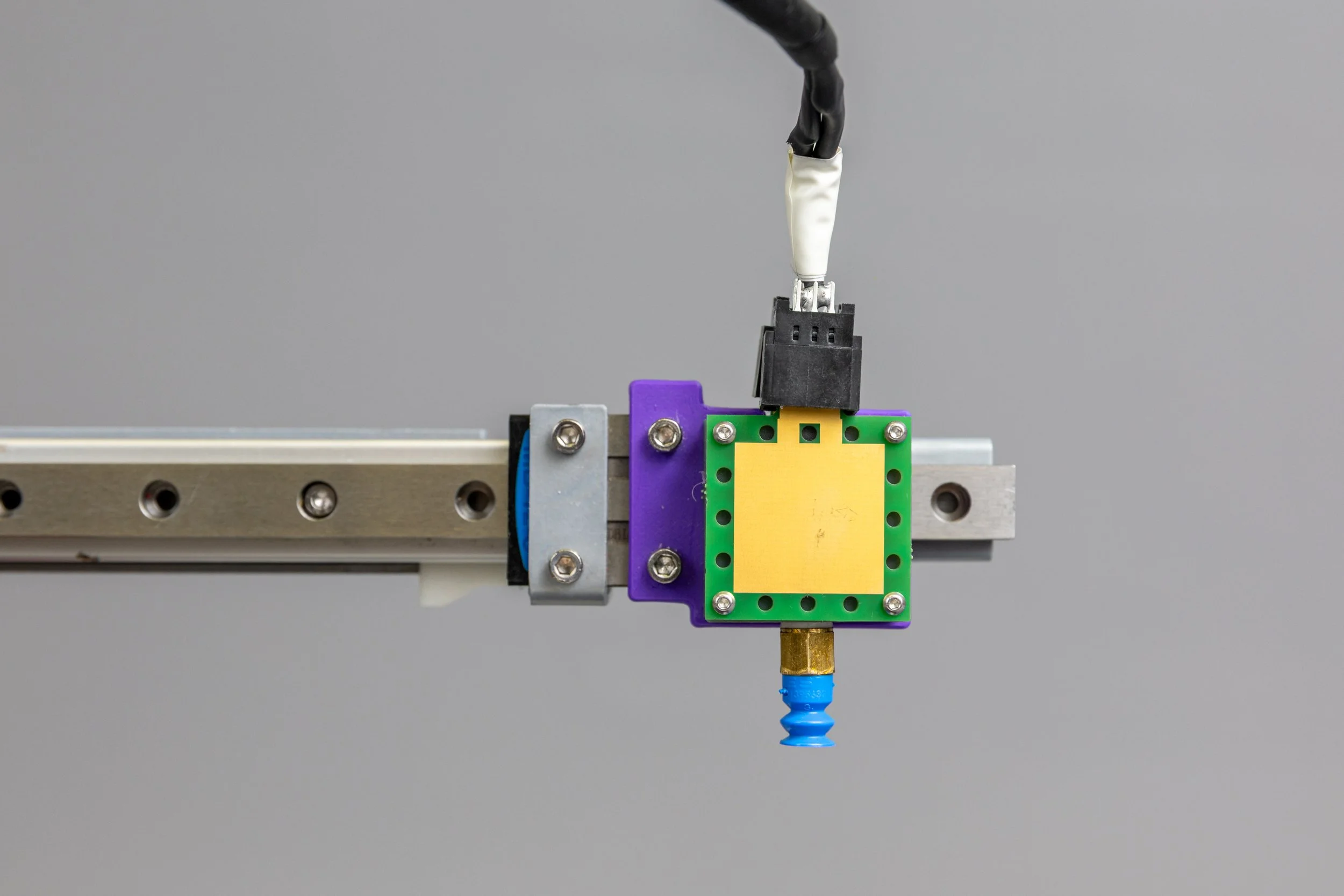
At the heart of our gripper is not a motor or a valve. It is a material. A nanostructured carbon framework, more than 99.9% air, that converts an electrical signal directly into suction — locally, instantly, and repeatedly.
The underlying principle is thermopneumatic actuation: electrically induced heating causes rapid air expansion, and the subsequent cooling generates vacuum. No external pressure source required.
How it works
1. Pulse A short electrical signal is applied to the aero material. The conductive carbon network heats up in milliseconds.
2. Expand Heat transfers directly to the air inside the material. The air expands rapidly, generating a pressure increase and expelling air from the gripper volume.
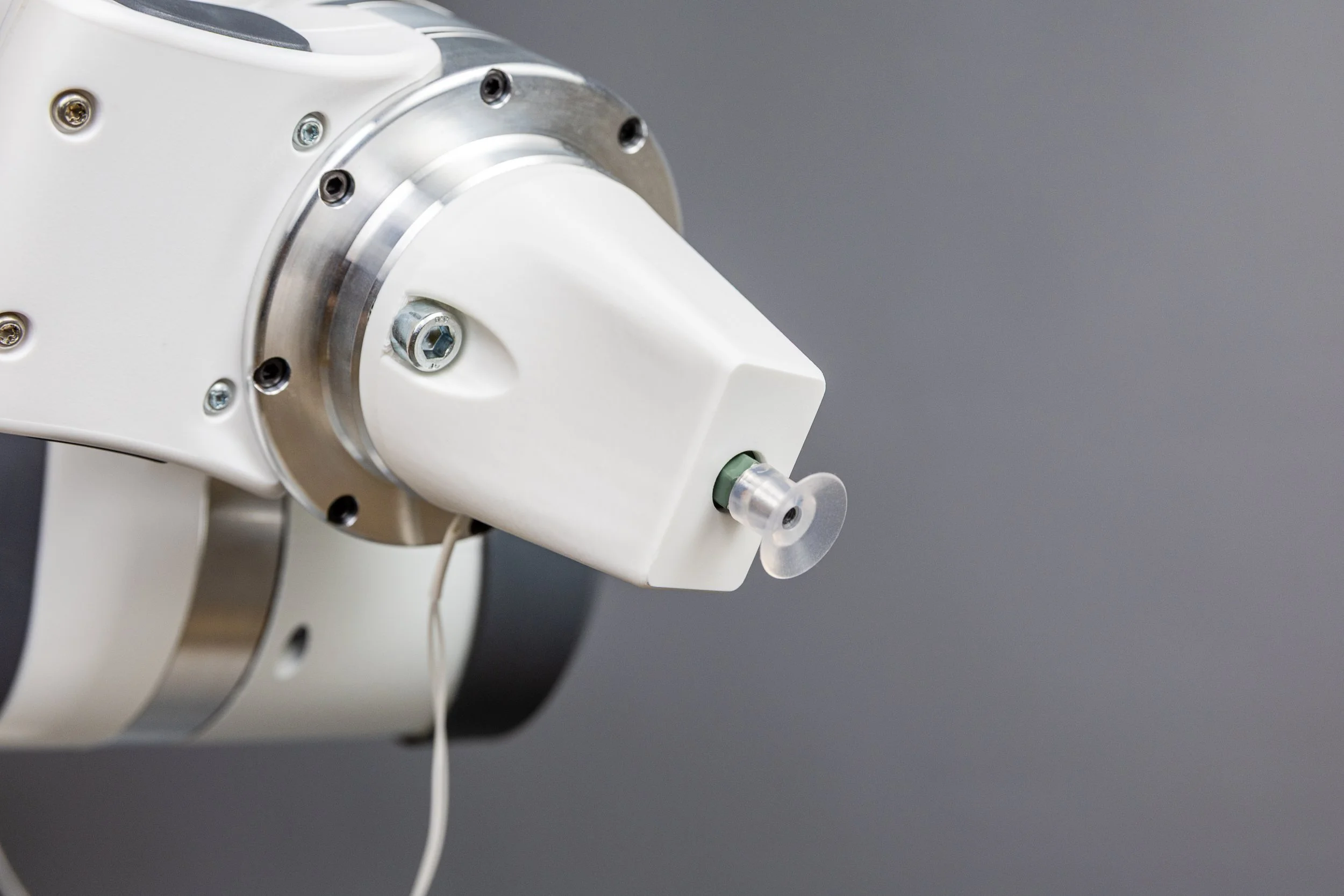
3. Grip The electrical pulse ends. The suction cup of the module is placed onto the workpiece surface. As the material cools, the enclosed air contracts — creating vacuum directly at the gripping point.
What makes it different
| AERO MATERIALS gripper | Conventional gripper | |
|---|---|---|
| Power source | Self-contained, electrically driven | Compressor or pump required |
| Energy use | Energy drawn only while switching | Typically continuous compressed-air consumption |
| Connections | Single electrical connection | Hoses, valves, fittings |
| Moving parts | No moving parts | Yes, wear requires maintenance |
| Operating temperature | Reliable also at elevated ambient and workpiece temperatures | Electric systems can overheat and lose performance at elevated temperatures |
| Form factor | Compact and modular by design | Difficult to miniaturize |
| Environment | Oil-free, no magnets, no rare earths, cleanroom-compatible | Not always suitable for sensitive environments |
Key characteristics
No infrastructure — operates without compressed air supply or pneumatic network
Competitive switching speed — matches conventional valve-based systems, without pneumatic infrastructure
Modular — units can be arranged in arrays to scale lifting capacity and add redundancy
Heat-tolerant — operates reliably at elevated operating and workpiece temperatures, where conventional electric vacuum systems tend to overheat and lose performance
Sensitive-environment ready — free of oils and lubricants, non-magnetic, suitable for electronics, medical, and cleanroom applications
Repeatable — no measurable material degradation or performance loss over hundrends of thousands of cycles in our tests
Ready to explore what this means for your application?
We are working with select partners to develop and deploy the AERO MATERIALS gripper in real production environments. We would be glad to walk you through the technology and discuss your use case.
Conventional vacuum grippers rely on compressors, tubing and Venturi nozzles. In the AeMaVac project we are developing an electrically switchable vacuum gripper based on our aeromaterials: each voxel generates the vacuum electrothermally right at the gripping point, with no compressed air supply, and can be combined modularly into scalable arrays.
AeMaVac is a ZIM cooperation project of AERO MATERIALS GmbH with Kiel University (Christian-Albrechts-Universität zu Kiel), running from January 2026 to December 2027.