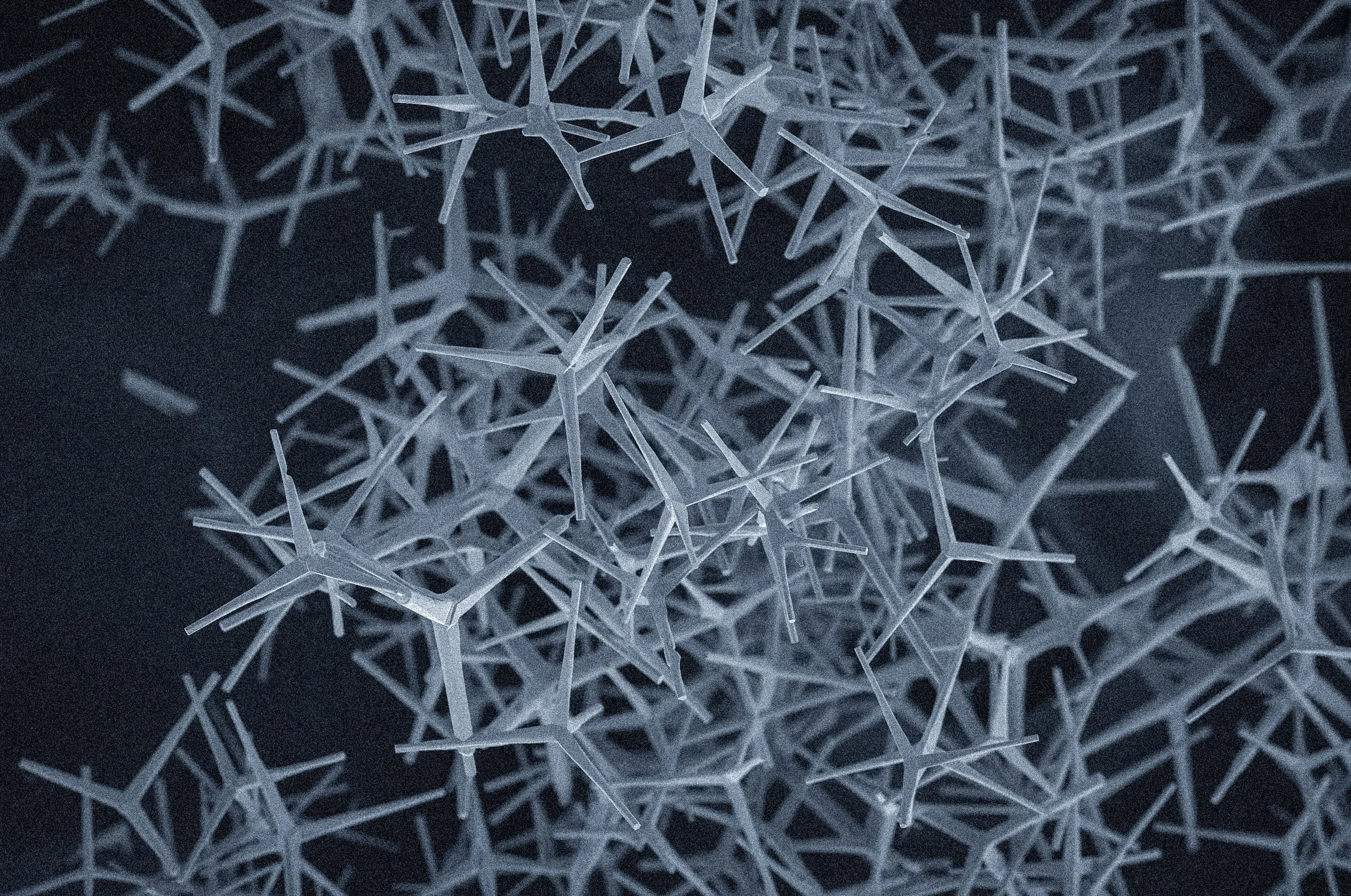
The material
Ultra-Low Density: With a density of less than 5 mg/cm³, our material is among the lightest in existence, making it ideal for applications where weight reduction is critical, such as aerospace, robotics, and high-performance equipment. For comparison, water’s density is 1 g/cm³, our material is nearly 200 times lighter.
Exceptional Porosity: Its highly porous structure provides an enormous internal surface area, crucial for processes like filtration, catalysis, and energy storage. Unlike active charcoal, this vast surface area is readily accessible to liquids, ensuring more efficient interaction and performance in various applications.
Thermal Stability and Fire Resistance: The material retains its structural integrity under extreme heat, making it suitable for high-temperature environments and fire-resistant applications.
Nanostructured Framework: Constructed from interconnected hollow microtubes, the material combines lightweight properties with exceptional mechanical strength and flexibility.
Pure Composition: Our material contains no rare-earths or metallic additives and is intrinsically non-magnetic. This prevents interference with magnetic fields and sensitive instrumentation, ideal for medical imaging environments, precision sensors, and cleanroom electronics, while also reducing supply-chain risk. The material consists of carbon only, with no rare-earth or metallic additives.
Production Process
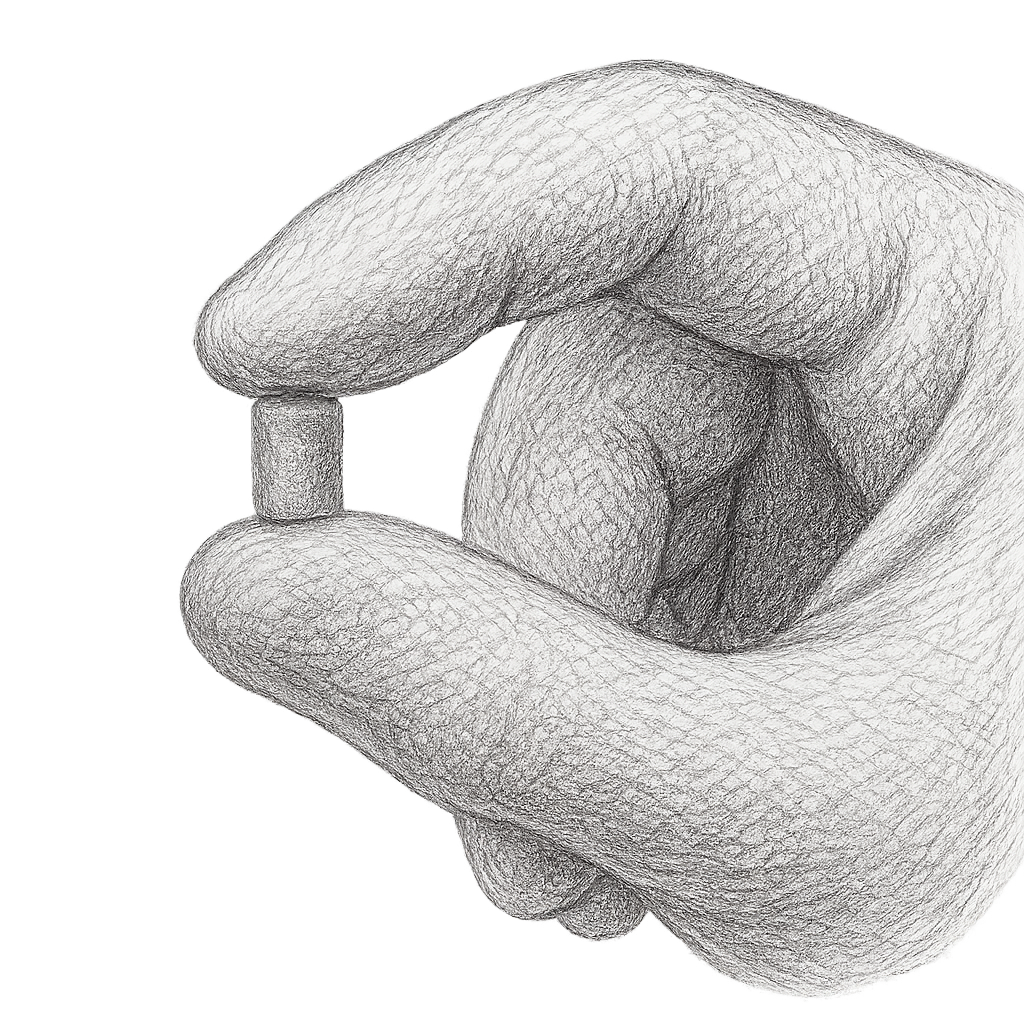
The material is crafted through a multi-step, precision-engineered process:
Starting with the creation of a robust template, this is coated with advanced nanomaterial dispersions before the template is etched away, leaving behind a highly functional lightweight structure. This process allows for scalable production without compromising quality, enabling broad adoption across industries.
Relevant Academic Research & Publications
If you want to go deeper into the material's fundamental properties, these papers establish the scientific foundation that all application work builds on.
Aerographite: Ultra lightweight, flexible nanowall, carbon microtube material with outstanding mechanical performance Mecklenburg et al. — Advanced Materials, 2012 The original publication introducing aero graphite to the scientific community — describing its synthesis, structure, and the combination of extreme lightness with mechanical robustness that makes it unique. Read the publication
Wet-Chemical Assembly of 2D Nanomaterials into Lightweight, Microtube-Shaped, and Macroscopic 3D Networks Rasch, Schütt et al. — ACS Applied Materials & Interfaces, 2019 Introduces the fabrication method behind our aero materials: graphene-based nanomaterials are assembled wet-chemically onto a sacrificial ceramic template, which is then etched away — leaving a highly porous (>99.9%), ultralight network of hollow, interconnected microtubes with remarkable mechanical stability and electrical conductivity. Read the publication
Hierarchical self-entangled carbon nanotube tube networks Schütt et al. — Nature Communications, 2017 Shows how carbon nanotubes can be assembled into open-porous, macroscopic 3D structures by infiltrating a sacrificial ceramic template — resulting in self-entangled tube networks that enhance compressive strength and maintain high electrical conductivity at very low material concentrations. Read the publication