Biotemplates
Researchers at the University of Kiel in part in collaboration with conformally GmbH developed approaches to use interconnected porous materials as biotemplates.
Most recently, new findings on aerohydrogels were published, showcasing the ultralight 3D scaffolds with built-in vascularization that allow fibroblasts, C2C12 cells, iPSC-derived cardiomyocytes and human brain cells to grow, connect, and communicate in a realistic environment. Further reading: Aerohydrogels as tailored cell scaffolds, 3D Aerohydrogel Scaffolds for Brain Tissue Engineering
AERO MATERIALS is the exclusive provider of the base material. So if you're working in areas like tissue engineering, cell culture or neuroscience and would like to explore whether these biotemplates could support your work, we'd love to hear from you. Use the form below to register your interest, and we'll be in touch.
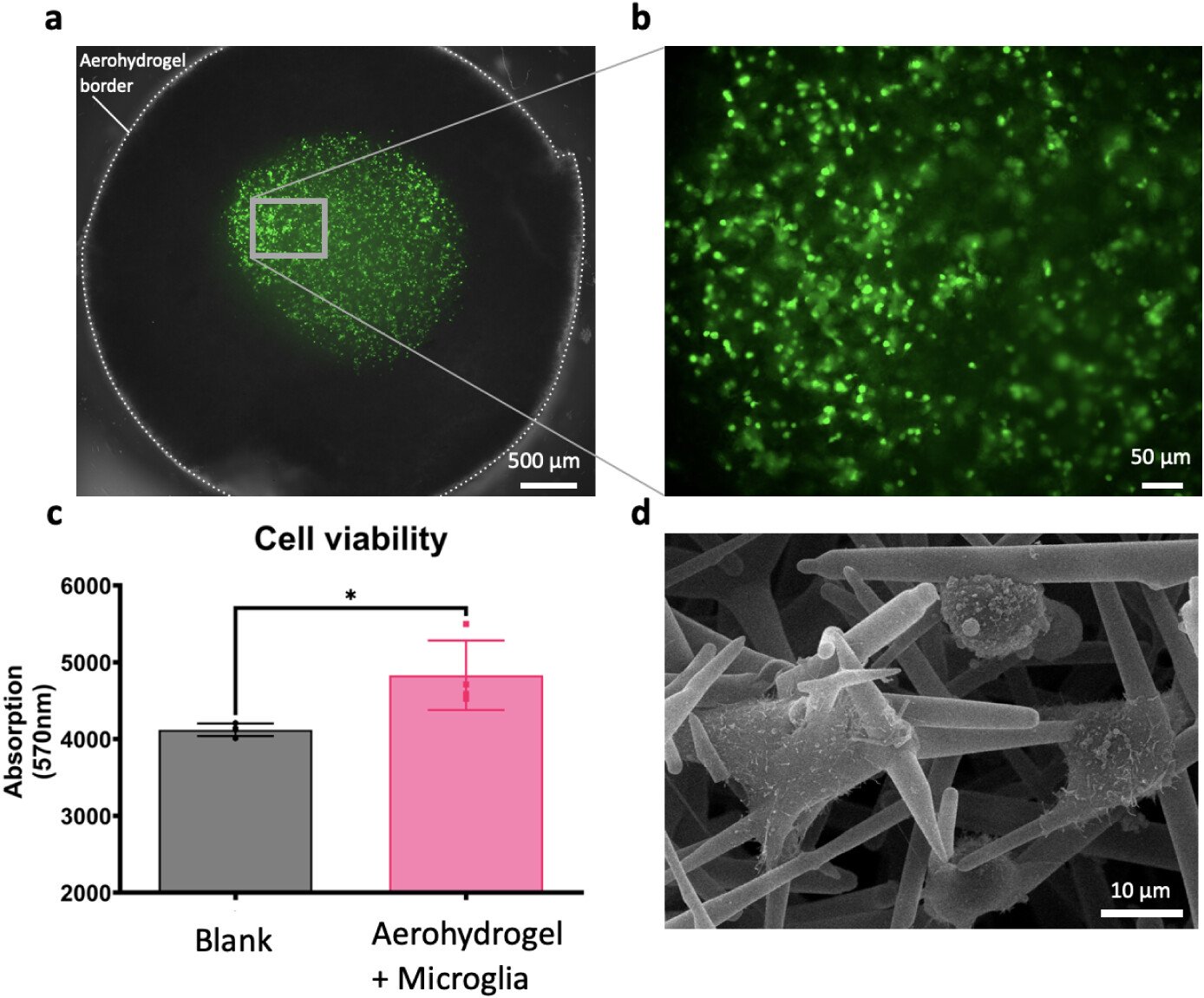
Image: Hartig et al., Chem. Bio. Eng., 2026 (CC BY 4.0)
Registration of Interest
Please take note:
This form is intended for companies and organizations only. We do not market to private customers.
By submitting this form, you are registering your interest in our biotemplates. This does not constitute an order, offer, or binding commitment on either side. Submission does not create any contractual obligation. We will review your inquiry and may follow up to discuss your requirements further.
